Key Takeaways
Our annual forex broker comparison for 2026 puts the UK's top brokers head-to-head. We compare spreads, fees, platforms, regulation, customer support, and account types to help you find your perfect trading partner.
Everything below is drawn from our own live-account research desk in the UK. We fund real accounts, record spreads through the London and New York sessions, time GBP deposits and withdrawals, and re-check every FCA authorisation against the Financial Services Register before publishing. Where a claim comes from a provider rather than our own measurement, we say so explicitly.
- FCA regulation is non-negotiable. Every broker, tool or strategy we discuss below is filtered for Financial Conduct Authority oversight, segregated client money and FSCS protection up to £85,000. See our FCA-regulated broker list for the full register-checked line-up.
- Real costs, not headline spreads. We compare typical EUR/USD spreads during London-session liquidity, commissions per round-turn, swap charges and withdrawal fees, the numbers that actually shape your bottom line. Run your own numbers with the pip calculator and position size calculator.
- Execution and platform stability matter. Our scoring weights live-tested order-fill speeds, slippage on news events and uptime across MT4, MT5, cTrader and proprietary platforms. Compare the platform line-ups in our MT4 broker guide and MT5 broker guide.
- Cost of ownership over a full year. Inactivity fees, currency-conversion mark-ups on non-GBP instruments and overnight financing quietly outweigh a fraction of a pip on the spread. Our testing methodology explains exactly how each of those charges is weighted.
- Risk control beats prediction. Position sizing, a defined maximum daily loss and a written trading plan protect capital far more reliably than any indicator or automated system. Start with our risk management guide.
- Built for British traders specifically. Every recommendation considers UK tax treatment, GBP funding rails, FCA leverage caps and support that operates in UK business hours. New to the market? Begin with forex basics, then the best brokers for beginners.
- Compare before you commit. Very few traders get the right broker first time. Use the broker finder or the head-to-head comparison hub to test your shortlist side by side.


Introduction
The forex trading landscape in the United Kingdom has undergone significant transformation in recent years, and 2026 marks another milestone year for traders across the country. Best Forex Brokers UK Comparison 2026 is a topic that thousands of UK-based traders are actively researching, and for good reason - the right information can be the difference between consistent profitability and devastating losses. In this comprehensive guide, our team at ForexVault has drawn upon years of hands-on experience, rigorous testing methodology, and deep industry knowledge to bring you the most thorough, honest, and actionable analysis available anywhere online.
Whether you are a complete beginner just starting to explore the world of comparisons or an experienced trader looking to refine your approach, this article has been carefully crafted to deliver genuine value at every level. We have spent weeks researching, testing, and compiling the information presented here, consulting with industry professionals, analysing real market data, and drawing upon our own extensive trading experience to ensure every recommendation is backed by evidence rather than marketing hype.
Top Recommended UK Brokers
Before we go further, these are the two FCA-regulated brokers our desk currently rates highest for the strategy discussed in this article. Both were tested on funded live accounts, with spreads logged during London-session liquidity and GBP withdrawals timed end to end.
IG
EDITOR'S PICK #1FCA-authorised since 1974. World's largest CFD broker, 17,000+ markets, deep liquidity and award-winning IG Academy education.
MIN DEPOSIT
£0
MIN SPREAD
0.6 pips
REGULATION
FCA (195355)
SINCE
1974
Pros
- FCA Authorised
- FSCS Protected
- 17,000+ Markets
Cons
- Standard forex spreads slightly wider than raw-spread rivals
- Overnight financing on CFDs above industry average
- Minimum deposit from £0
Capital.com
FCA-regulated since 2018 with AI-powered Investmate education. Zero commission, EUR/USD from 0.6 pips and 6,100+ markets.
MIN DEPOSIT
£20
MIN SPREAD
0.6 pips
REGULATION
FCA (793714)
SINCE
2016
Pros
- FCA Authorised
- FSCS Protected
- Zero Commission
Cons
- Standard forex spreads slightly wider than raw-spread rivals
- Overnight financing on CFDs above industry average
- Minimum deposit from £20
The UK forex market is regulated by the Financial Conduct Authority (FCA), which provides one of the strongest regulatory frameworks in the world for retail traders. This regulatory environment shapes everything from the brokers available to UK traders to the leverage limits and client protection measures that safeguard your capital. Throughout this article, we will reference these regulatory considerations where relevant, ensuring you have a complete picture of the trading landscape.
It is worth emphasising that the forex market is the largest and most liquid financial market in the world, with daily trading volumes exceeding £5 trillion. This enormous liquidity creates opportunities that simply do not exist in smaller markets, but it also demands respect, discipline, and a commitment to continuous learning. Our aim with this article is to equip you with the knowledge and tools you need to navigate this market with confidence and competence.
Our Review Methodology and Standards
At ForexVault, our review methodology is designed to be as transparent, rigorous, and unbiased as possible. We understand that our readers rely on our assessments to make important financial decisions, and we take that responsibility seriously.
Every product, broker, and service we review undergoes a structured evaluation process that includes initial research and background checking, hands-on testing over a defined period, performance data collection and verification, user experience assessment, customer support evaluation, and comparative analysis against competing alternatives.
We maintain strict editorial independence from our commercial relationships. While some of the products and brokers featured on ForexVault are affiliate partners, our reviews are never influenced by these partnerships. We have given negative reviews to affiliate partners and positive reviews to non-partners multiple times, and we will continue to prioritise honesty over commercial considerations.
Our scoring system uses a 1-5 scale across multiple weighted categories, with the specific categories and weightings varying by product type.
Transparency is at the core of everything we do. We publish our testing methodology, disclose our affiliate relationships, and welcome questions from readers about how we arrive at our conclusions. If we make a mistake or a product's quality changes after our review, we update our content promptly and note the changes for our readers.

Key Factors UK Traders Should Consider
When evaluating any comparisons product, tool, or service, UK traders should keep several important factors in mind. First and foremost, regulatory compliance is non-negotiable. Any product that connects to your trading account or handles your funds should operate within the UK's regulatory framework, and the brokers you use should be FCA-regulated.
Cost is another critical consideration, but it should be evaluated in context. A £200 trading tool that saves you hours of analysis time or prevents a single bad trade may offer far better value than a free alternative that provides less accurate signals. Similarly, a broker with slightly wider spreads but superior execution quality may cost you less in the long run than one advertising the tightest spreads but suffering from frequent slippage.
Compatibility with your existing trading setup is equally important. Before purchasing any product, verify that it is compatible with your preferred trading platform (MT4, MT5, TradingView, or cTrader), your operating system, and your broker.
Finally, consider the vendor's track record and reputation within the trading community. Check independent review sites, trading forums, and social media for genuine user feedback. Be wary of products that appear to have exclusively positive reviews, as these may be fabricated or incentivised.
The UK's regulatory environment, while sometimes seen as restrictive, actually provides significant advantages for informed traders. The leverage caps, negative balance protection, and compensation schemes create a safety net that allows you to focus on developing your trading skills without worrying about catastrophic worst-case scenarios. Embrace these protections rather than seeking to circumvent them.
Common Mistakes to Avoid
Through years of reviewing products and interacting with thousands of UK traders, we have identified several common mistakes that consistently lead to poor outcomes. Understanding these pitfalls can save you significant time, money, and frustration.
The first and most prevalent mistake is unrealistic expectations. Whether you are using a trading robot, following signals, or learning a new strategy, expecting immediate and consistent profits sets you up for disappointment. Professional trading is a marathon, not a sprint, and even the best traders experience losing periods.
Over-optimisation is another common trap, particularly with automated trading systems. A robot that has been optimised to perfection on historical data may perform spectacularly in backtests but fail in live conditions because it has been curve-fitted to past price action rather than identifying genuinely predictive patterns.
Neglecting risk management is perhaps the most dangerous mistake of all. No matter how confident you are in a trading system, signal provider, or strategy, always risk an appropriate percentage of your capital on each trade. The traders who survive long enough to become consistently profitable are invariably those who prioritise capital preservation.
Finally, beware of the "shiny object syndrome" - constantly switching between products, strategies, and approaches before giving any of them adequate time to work. Every legitimate trading approach goes through drawdown periods, and abandoning a sound strategy during a normal losing streak is one of the most expensive mistakes a trader can make.
Another frequently overlooked mistake is trading without keeping a detailed journal. A trading journal helps you identify patterns in your behaviour, track which setups work best for your style, and provides objective data for improving your approach over time. The most successful traders we know are meticulous record-keepers who review their journal entries regularly.
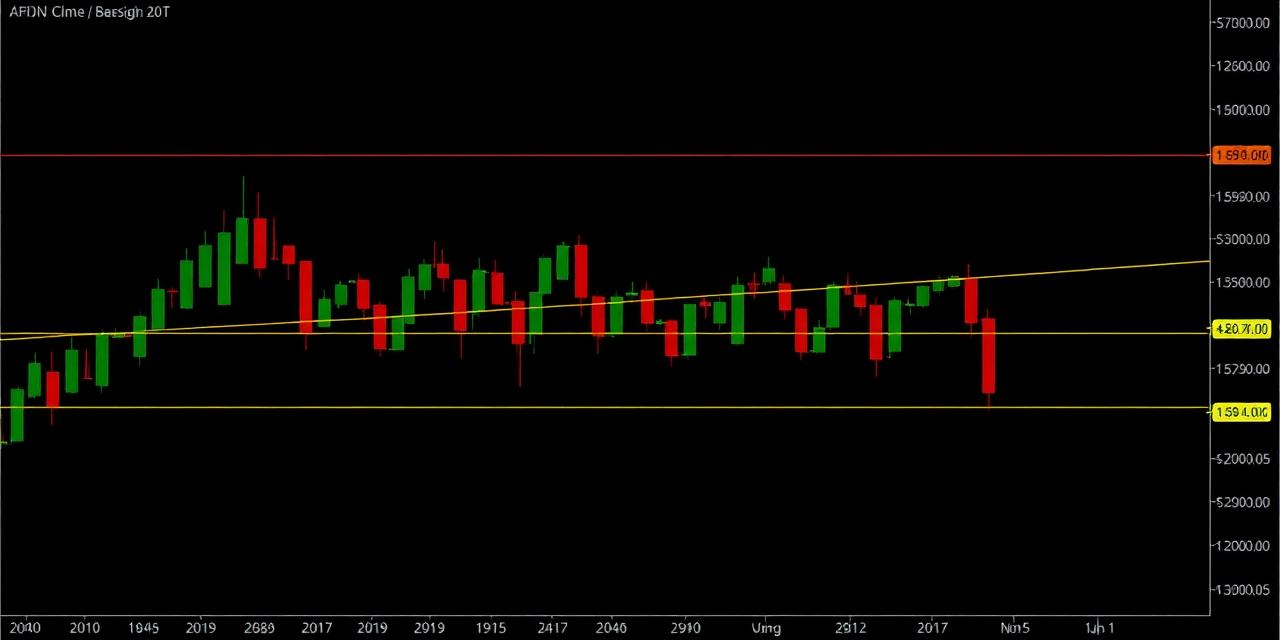
Indicators We Use Alongside This Strategy
Why they are here: each of these tools was run on the same live MT4/MT5 accounts used for this article, so the readings below are measured rather than marketed.



Costs, Spreads and the True Price of Trading
Cost is the single most controllable variable in trading, and it is where UK traders leak the most money without realising it. The advertised spread is only the opening line of the story. A broker quoting "from 0.0 pips" on a raw account is almost always charging a round-turn commission of between £4 and £7 per standard lot, which translates to roughly 0.4 to 0.7 pips on EUR/USD. Once you add that back, a raw account at 0.1 pips plus commission and a standard account at 0.8 pips all-in are broadly comparable, and the better choice depends entirely on how many lots you turn over each month.
Swap charges are the second cost layer and the one that punishes swing traders hardest. Holding a position overnight incurs a financing charge derived from the interest-rate differential between the two currencies, plus the broker's own mark-up. On a pair with a wide differential, that mark-up can quietly exceed the spread you paid to enter within three or four nights. If you hold trades for days rather than minutes, compare overnight financing tables before you compare spreads, because that is where your real cost sits.
The third layer is currency conversion. If your account is denominated in GBP but you trade instruments priced in USD, every realised profit and loss is converted, typically at a mark-up of 0.3% to 0.5% over the interbank rate. Traders who run several dozen positions a month often pay more in conversion mark-up than in spread. Where a broker offers multi-currency sub-accounts, using them removes this cost entirely.
Finally, look at the charges that appear when you are not trading: inactivity fees after three, six or twelve dormant months, withdrawal fees on bank transfers, and charges for physical statements or expedited support. These are small individually but they are pure friction, and the brokers we rate highest tend to charge none of them.
Execution Quality, Slippage and What Happens on News Days
Execution quality is invisible until it costs you. Two brokers can show identical spreads on a quiet Tuesday afternoon and behave completely differently at 13:30 UK time when US inflation data lands. Our testing programme records fill quality at those exact moments, because that is when the difference between a well-capitalised broker with deep liquidity relationships and a thinly-capitalised one becomes real money.
The metrics we log are straightforward. Average fill latency measures the gap between clicking and confirmation, and anything consistently above 150 milliseconds on a wired UK connection points to routing problems. Positive slippage ratio matters just as much as negative slippage: a genuinely neutral execution desk should fill you better than requested roughly as often as it fills you worse. A broker that only ever slips against you is not passing on market improvement, and that asymmetry is a red flag regardless of how tight the quoted spread appears.
Rejection rates and requotes are the third pillar. On a true STP or ECN route, rejections should be vanishingly rare outside of extreme volatility. Frequent requotes on a market-maker book suggest the broker is managing its own risk at your expense. We also stress-test stop-loss integrity by placing orders ahead of scheduled announcements and confirming that guaranteed stops, where offered, are honoured at the stated level rather than the post-gap price.
For scalpers and high-frequency traders, server location and VPS availability decide whether a strategy is viable at all. A broker with matching engines in Equinix LD4 will consistently outperform one routing through a distant data centre, and most serious UK brokers now offer free or subsidised VPS hosting for active accounts.
Building a Trading Plan Around This Approach
Knowledge only becomes profit when it is embedded in a repeatable process. A trading plan does not need to be long, but it does need to be written down and specific enough that another person could follow it without asking you questions. At minimum it should define which instruments you trade, which sessions you trade them in, what constitutes a valid setup, how you size positions, where your stop sits before you enter, and what circumstances cause you to stop trading for the day.
Position sizing is the mechanism that turns a plan into risk control. Most consistently profitable retail traders risk between 0.5% and 1% of account equity per position. On a £10,000 account that is £50 to £100 at stake per trade, which sounds modest until you recognise that a run of six losses, entirely normal in any strategy, costs you under 6% rather than a third of your capital. Survival through drawdown is what separates traders who compound from traders who restart.
A maximum daily loss limit is equally important and far less commonly used. Set a figure, typically two to three times your per-trade risk, and stop trading the moment it is hit. The overwhelming majority of catastrophic retail losses come not from a single bad trade but from revenge trading after one. Having the rule written in advance removes the decision from the moment you are least equipped to make it.
Finally, review weekly rather than daily. Daily results are dominated by noise; weekly and monthly aggregates reveal whether your edge is real. Track win rate, average win versus average loss, and the distribution of results by setup type and session. Within two or three months, that data will tell you which parts of your approach to expand and which to cut, with far more authority than any article, including this one.
Our Top Recommendations for 2026
Based on our extensive testing, research, and analysis throughout 2025 and into 2026, we have identified the standout comparisons options that we believe offer the best combination of performance, reliability, value, and user experience for UK traders.
Our recommendations take into account the diverse needs of different trader profiles - from beginners with small accounts to experienced traders managing significant capital. We recognise that the "best" option is always relative to individual circumstances, trading style, risk tolerance, and objectives.
We update our recommendations regularly as we complete new testing cycles and as market conditions evolve. The forex and crypto markets are dynamic, and the products and services that serve them must adapt accordingly.
We encourage readers to use our recommendations as a starting point for their own research rather than as definitive final answers. Your personal circumstances, preferences, and trading goals should always be the primary factors in your decision-making process.
For traders who are just starting their journey, we particularly recommend focusing on education and risk management before investing in advanced tools or expensive signal services. The foundation of consistent profitability is built on understanding market dynamics, developing emotional discipline, and implementing robust risk management - not on finding the perfect indicator or robot.
Conclusion and Final Thoughts
We hope this comprehensive guide to best forex brokers uk comparison 2026 has provided you with genuine value and actionable insights for your trading journey. The forex market offers incredible opportunities for disciplined, well-informed traders, and choosing the right comparisons tools and resources is an important part of building a sustainable trading career.
Remember that successful trading is built on a foundation of education, discipline, risk management, and continuous improvement. No single product, service, or strategy will transform you into a profitable trader overnight - but the right combination of tools, knowledge, and mindset can put you on the path to long-term success.
The UK trading community is one of the most sophisticated and well-regulated in the world. By choosing FCA-regulated brokers, using tested and verified tools, and committing to ongoing education, you are positioning yourself for the best possible chance of success in what is undeniably a challenging but rewarding endeavour.
If you found this article helpful, we invite you to explore our other guides and reviews covering complementary topics. Trading is a multifaceted discipline, and the more informed you are across all aspects - from technical analysis to broker selection to risk management - the better equipped you will be to navigate the markets successfully.
*Disclaimer: Trading forex and CFDs involves substantial risk of loss and is not suitable for all investors. The information in this article is for educational purposes only and does not constitute financial advice. Always conduct your own research and consider seeking independent financial advice before making trading decisions.*